Best Cover Letter Templates for Job Applications
Compare five cover letter templates for job applications, including standard, entry-level, career-change, experienced, and short online-form versions.
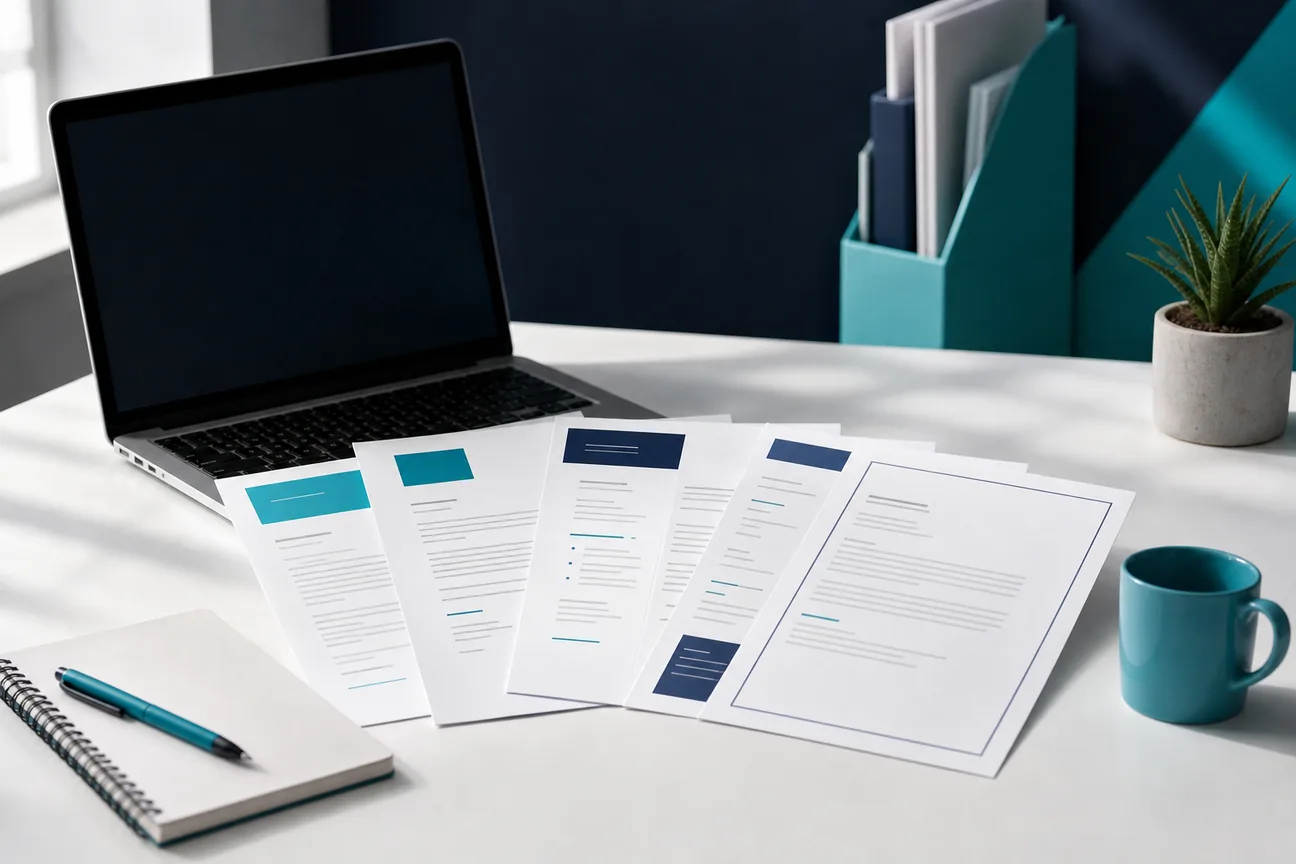
A cover letter template for a job application gives you a clean start, but the details should fit the role. These five formats cover common situations, with editable examples you can adapt for a document or an online form.
We analyzed 53 comments from Reddit and YouTube about cover letter templates and found that 19% mentioned tailored content.
Choose the one that matches your experience and application type. Then replace every bracketed prompt with a true detail from your background.
Table of Contents
- Standard Professional Cover Letter Template: A Flexible Choice for Most Applications
- Entry-Level Cover Letter Template: Connect Education, Projects, and Transferable Skills
- Career-Change Cover Letter Template: Explain the Move and Show Transferable Strengths
- Experienced Professional Cover Letter Template: Lead With Relevant Results
- Short Online-Application Cover Letter Template: Fit a Text Box Without Losing Relevance
- Quick Comparison: Which Cover Letter Template Fits Your Application?
- Frequently Asked Questions
- Conclusion
1. Standard Professional Cover Letter Template: A Flexible Choice for Most Applications
Use this classic business-letter format when you have relevant experience and want a clear, direct introduction. It works for many office, service, and professional roles, including accountant, human resources, and social work applications.
The structure is easy to scan: a short header, greeting, opening, one or two body paragraphs, and a closing. A business letter follows a formal layout, which makes this a safe starting point when an employer expects a traditional letter.
Copy-and-edit template:
Dear [Hiring Manager’s Name],
I’m applying for the [Job Title] position at [Company]. My experience in [relevant field or skill] includes [specific task or result that matches the posting]. I’m interested in this role because [true reason tied to the work or employer].
In my current or recent role, I [describe a relevant action]. This helped [team, customer, or business outcome]. I’d bring the same [relevant skill] to your team, especially as you [role-specific need from the posting].
Thank you for your time. I’d welcome the chance to discuss how my experience fits the role.
Sincerely,
[Your Name]
Make the first body example do the work. For an accountant role, that might be a reporting task you handled. For social work, it could be a client-support duty. For HR, use a hiring, onboarding, or employee-support example only if you’ve done it.
Keep the design plain if you’ll upload the letter to a career site. Use a readable font and clear paragraph breaks. If the employer requests a particular file type, follow that instruction. For help shaping the content before you format it, use these cover letter writing steps.
2. Entry-Level Cover Letter Template: Connect Education, Projects, and Transferable Skills
This format is for students, recent graduates, and applicants with little paid experience in the target field. It puts useful proof up front: a class project, internship, volunteer role, campus job, or skill you used in a real task.
Don’t apologize for being new. Pick one example that shows how you work, then connect it to a need in the job posting. If a role asks for clear communication, describe a project where you explained complex information to a group. If it asks for organization, point to a time you tracked tasks or met a deadline.
Copy-and-edit template:
Dear [Hiring Manager’s Name],
I’m applying for the [Job Title] position at [Company]. Through [course, project, internship, or volunteer role], I built experience in [relevant skill]. I’m interested in this opening because [specific reason related to the role].
For [project or task], I [what you did]. The result was [outcome, deliverable, or lesson]. That work helped me build [skill from the job posting], which I’d be ready to use when [role responsibility].
Thank you for considering my application. I’d be glad to discuss how my background could support your team.
Sincerely,
[Your Name]
A useful result doesn’t need to be a sales figure. You can name a finished report, a process you improved, a group you supported, or a deadline you met. Be exact about your part. “Helped with a class project” says little; “organized interview notes for a five-person research project” gives the reader something to picture.
Keep the letter focused on evidence, not a list of traits. If the posting asks for teamwork, show what you did with others. If it asks for a software skill, say where you used it. Connect education and experience to the role rather than relying on a generic claim.
3. Career-Change Cover Letter Template: Explain the Move and Show Transferable Strengths
Choose this format when your past job titles don’t make your fit obvious. It names the change early, shows how your skills carry over, and gives a reason you’re prepared to move into the new field.
A teacher moving toward corporate training, for example, might connect lesson planning with training design. A customer-support worker applying for sales could point to account care or solving customer problems. Those connections should come from your own work, not from a made-up match.
Copy-and-edit template:
Dear [Hiring Manager’s Name],
I’m applying for the [Job Title] position at [Company]. After working in [current or past field], I’m moving toward [new field] because [clear, positive reason tied to the work].
In my role as [Past Job Title], I [specific action or achievement]. That work built my skills in [transferable skill], which connects to your need for [requirement from the posting]. To prepare for this change, I’ve [course, project, volunteer work, or other true preparation].
I’d welcome the chance to discuss how my background could support [team or job responsibility]. Thank you for your consideration.
Sincerely,
[Your Name]
Keep the reason for the change brief and forward-looking. Then spend more space on proof. The career-change letter guidance recommends explaining the pivot early and tying transferable skills to specific examples.
Avoid saying you’re “willing to learn” as your only evidence. Name a step you’ve already taken, such as a course, portfolio project, or volunteer task, if it applies. The reader should see both why you’re changing direction and what you can contribute now.
4. Experienced Professional Cover Letter Template: Lead With Relevant Results
This format suits applicants with experience that matches the role. Lead with a result or responsibility that matters to the employer, rather than repeating your resume’s job history.
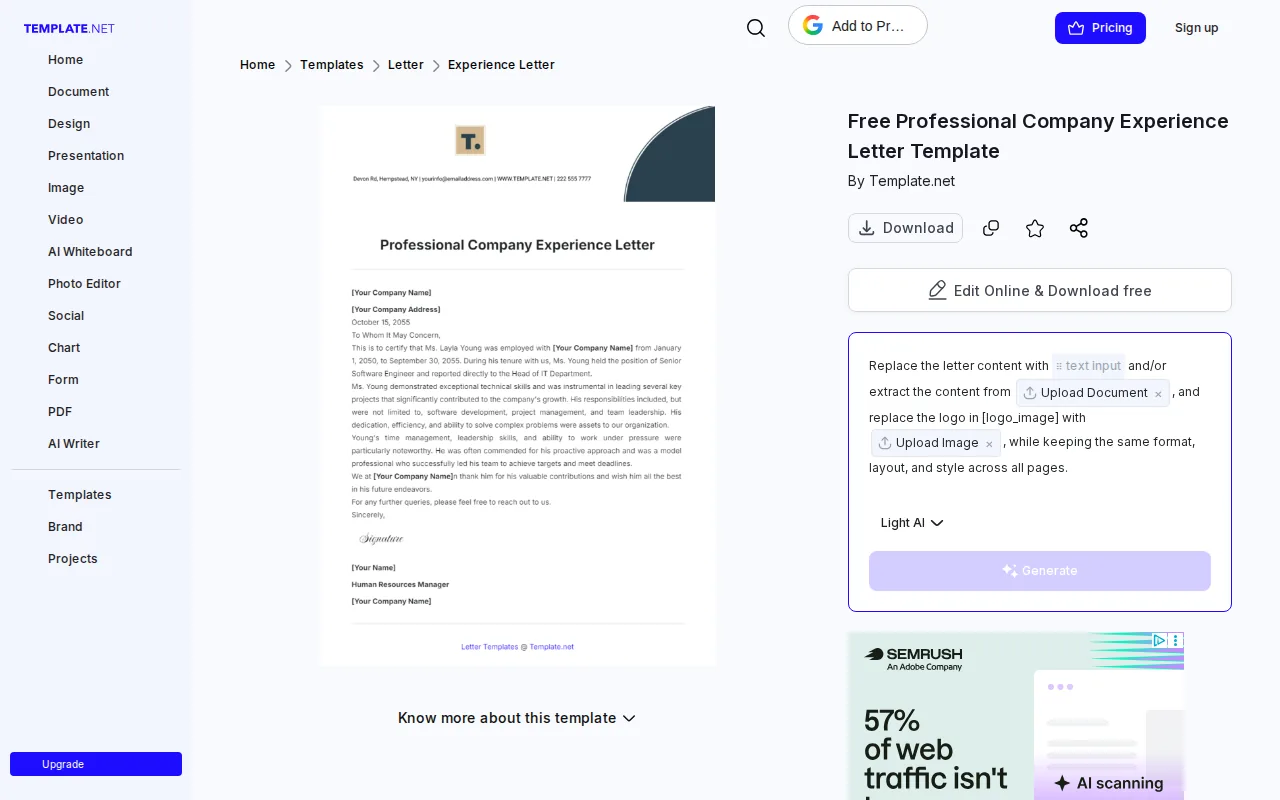
Choose one or two examples. A project manager might describe a project delivered on schedule. An HR professional could name a process they supported. A sales applicant might explain a target they met, if that claim is accurate and they can give the context.
Copy-and-edit template:
Dear [Hiring Manager’s Name],
I’m applying for the [Job Title] position at [Company]. In [current or recent role], I [relevant action], which led to [specific result or outcome]. That experience matches your need for [job requirement].
I also bring experience in [second relevant area]. For example, I [brief example showing what you did and who it helped]. I’m interested in this role because [specific reason connected to the work or employer].
Thank you for reviewing my application. I’d welcome a conversation about how my experience fits your team’s needs.
Sincerely,
[Your Name]
Use a number only when it makes the result clearer and you can explain how it was measured. If you can’t share a figure, describe the change in plain terms, such as fewer handoff delays or a finished project used by a team. Don’t claim sole credit for a group result.
5. Short Online-Application Cover Letter Template: Fit a Text Box Without Losing Relevance
Use this compact version when an application has a small text box or asks for a brief note. It still needs a role-specific opening, one useful example, and a clear close. Short should mean focused, not copied and pasted without edits.
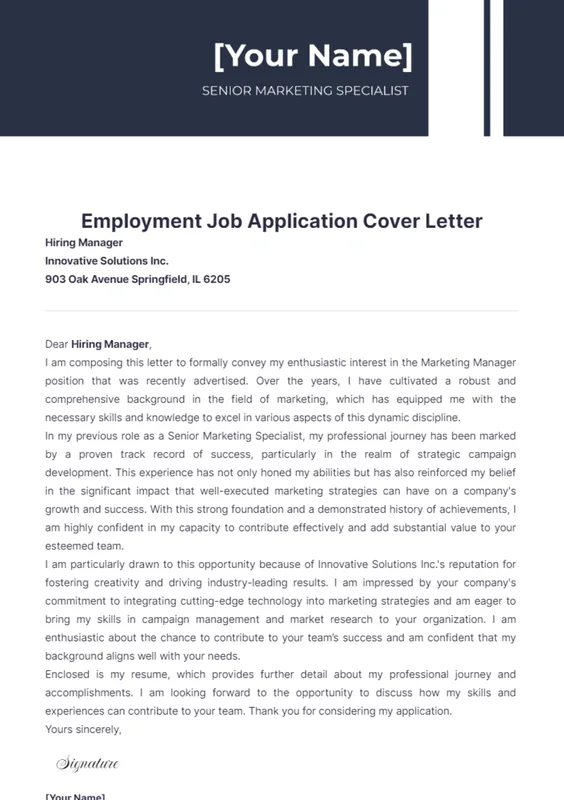
Copy-and-edit template:
I’m applying for the [Job Title] position at [Company]. My experience in [relevant area] includes [specific task or result tied to the posting]. I’m interested in this role because [true reason]. I’d bring [relevant skill] to [specific team need or responsibility]. Thank you for considering my application.
Before pasting, check the form’s instructions. Some employer sites ask for a letter as a file; others provide a text field or don’t ask for one. Keep a document version if needed, but remove address blocks and formal sign-offs from a short text-box response unless the form calls for them.
For job seekers applying through LinkedIn or employer career sites, Apply with AI can help draft application text and fill repeated fields during a run you start. You review the result, and auto-submit can be turned off. Review the application workflow and check every claim before submitting.
Pro Tip: Keep a short base draft, but change the role name, one relevant example, and your reason for applying each time.Apply with AI is useful when the work involves more than writing a letter. Its Chrome extension supports job seekers using LinkedIn and employer career sites, where saved answers and resumes can help with repeated fields. You still review the application before you submit it.
Quick Comparison: Which Cover Letter Template Fits Your Application?
Match the format to the main question a hiring manager may have. Is your fit clear from your work history? Are you showing potential without much direct experience? Does the form limit how much you can write?
| Template | Best fit | Lead with | Format choice |
|---|---|---|---|
| Standard professional | Most applicants with related experience | One example tied to a job need | Document or portal upload |
| Entry-level | Students and new graduates | Project, coursework, internship, or volunteer work | Document or portal upload |
| Career change | Applicants moving to a new field | Transferable skill and reason for the move | Document or portal upload |
| Experienced professional | Applicants with relevant work history | Outcome that matches the role | Document or portal upload |
| Short online application | Forms with a text box or brief-note request | One fit statement and one proof point | Plain text in the form |
For a downloadable file, use a clean, text-based layout and check that it opens as expected. For an online form, follow the employer’s own instructions and avoid pasting a full address header into a short response field. When you’re applying through an online workflow, Apply with AI can assist with drafting and repeat fields, but your review should remain the final check.
Key Takeaway: Pick the format that explains your fit fastest, then use one truthful example to make that fit clear.Frequently Asked Questions
What should a cover letter include?
A cover letter should include a clear opening, relevant proof, a reason for applying, and a polite close. Add a header and greeting when you’re sending a formal document. In the body, connect one or two examples from your background to the job’s needs. Leave out details that don’t help explain your fit.
How long should a cover letter be?
A cover letter is usually strongest when it stays concise and fits on one page. For a form with a word or character limit, follow that limit instead. Keep only the details that support your application: why this role interests you, what relevant work you’ve done, and how that work connects to the position.
Should I use a PDF or Word file for a cover letter?
Use the file type the employer requests. If the application gives no preference, choose a format that preserves your layout and remains easy to read. For a text box, paste plain text and check the line breaks. Don’t upload a designed file when the form asks for a written response.
How do I make a cover letter ATS-friendly?
Use simple formatting and words from the job posting when they accurately describe your experience. Keep the letter in a clear reading order, with ordinary paragraphs instead of complex layouts. A keyword should fit naturally in a sentence and have supporting proof. Never add a skill or result just because it appears in the listing.
Conclusion
Start with the template that fits your career stage, then tailor its example to the exact job. If you’re applying through LinkedIn or an employer site and want help with repeated fields, try Apply with AI’s job application workflow; review the draft before you submit.